

Waste Tyre Chemical Recycling: An Oxygen-Limited Pyrolysis Route for Recovering Oil, Carbon and Steel from End-of-Life Tyres廃タイヤ ケミカルリサイクル ─ 酸素制限下の乾留熱分解による再生油・再生カーボンブラック・再生スチールの回収
End-of-life tyres are a bulky, non-decomposing composite of oil-derived polymer, carbon and steel that continues to be generated wherever vehicles operate. This paper describes an integrated pyrolysis line in which prepared tyres are thermally decomposed under oxygen-limited conditions and separated into three material streams — regenerated oil (450–500 L / t), recovered carbon (300–330 kg / t) and recovered steel (140–150 kg / t). Non-condensable gas is fed back into process heating and, where the configuration permits, into on-site power generation, reducing external energy demand. Under the source calculation basis, CO2 emissions per tonne of feedstock fall from 2.92 t (incineration) to 0.36 t (this system), corresponding to a reduction of approximately 88%.
The route treats tyres as a manufactured composite carrying residual industrial value rather than as terminal waste. Sealed, negatively-pressurised construction limits release of process gas and odour, while temperature and pressure instrumentation isolates non-nominal conditions at the section level. Standardised measurement of yield, energy balance and downstream reuse is presented as the basis for continued improvement across installations.
使用済みタイヤは、石油由来のポリマー・カーボン・スチールからなる、かさばり自然分解しない複合材料であり、車両が使用される限り発生し続ける。本稿では、前処理したタイヤを酸素制限下で乾留熱分解し、再生油(450–500 L / トン)、再生カーボンブラック(300–330 kg / トン)、再生スチール(140–150 kg / トン)の3つの材料へ分離回収する一連の乾留熱分解ラインについて述べる。工程で発生する不凝縮ガスは、加熱燃料および設備構成に応じて発電に利用され、外部からのエネルギー供給を低減する。元資料の算定条件において、原料1トンあたりのCO2排出量は焼却処理の2.92トンから本方式の0.36トンへと減少し、約88%の削減に相当する。
本方式は、タイヤを終末廃棄物ではなく、なお産業的価値を持つ製造複合材として扱う。密閉・負圧の構造により工程ガスと臭気の外部への洩しを抑制し、温度・圧力の計装を通じて遡行時には当該区間を切り離す。回収量・エネルギー収支・利用先の標準化された測定を、導入サイトごとの改善の基盤として位置づける。
1Introduction序論 · 課題の所在
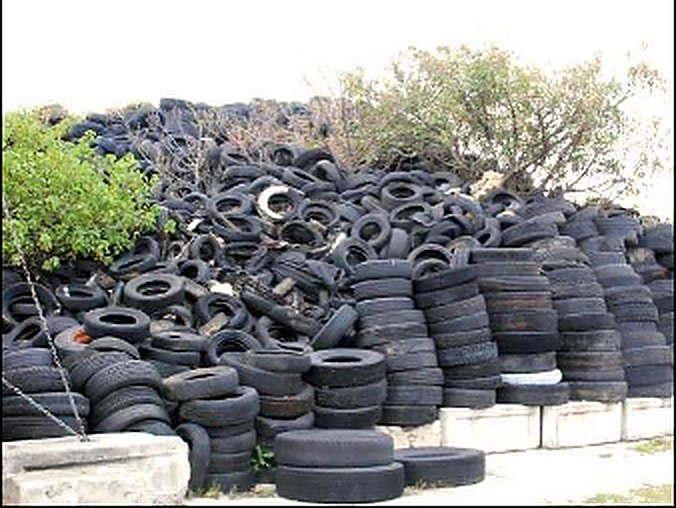
Tyres are consumed wherever vehicles are used, so end-of-life tyres are generated continuously and in volume. They are bulky and do not decompose, and long-term stockpiling brings fire and environmental risk.
タイヤは車両が使われる限り消費されるため、使用済みタイヤは継続的かつ大量に発生する。かさばる上に自然分解せず、長期間にわたる野積みは火災・環境面のリスクを伴う。
Because a tyre is a manufactured composite of oil-derived polymer, carbon and steel, disposal also means discarding material that still holds industrial value. Suitable treatment and resource circulation are therefore practical requirements — not an abstract ideal.
タイヤは石油由来原料・カーボン・スチールを組み合わせて製造された複合製品であり、廃棄はすなわち産業的価値をなお保持する材料を失うことを意味する。適正な処理と資源循環は理念ではなく、実務上の要請である。
2Pyrolysis Process乾留熱分解プロセス
Prepared tyres are heated in the absence of sufficient oxygen, so the material decomposes into a vapour stream rather than burning. The vapour is separated, cooled and condensed into oil 450–500 L/t; solid and metal fractions are recovered separately as carbon 300–330 kg/t and steel wire 140–150 kg/t.
前処理したタイヤを酸素が十分に存在しない状態で加熱することにより、材料は燃焼せずに分解し、蒸気(ガス)として取り出される。この蒸気を分離・冷却・凝縮して油 450–500 L/t とし、固形分・金属分はそれぞれカーボン 300–330 kg/t 、スチールワイヤ 140–150 kg/t として別に回収する。
3Recovered Resources回収物の内訳
Three material streams are recovered per tonne of feedstock. Yield ranges are indicative reference values taken from the source material and vary with feedstock, operating conditions and plant configuration.
原料1トンあたり、3つの材料を回収する。回収量の範囲は元資料に基づく参考値であり、原料・運転条件・設備構成によって変動する。
| Stream回収物 | Yield / tonne回収量 / トン | Industrial destination主な利用先 |
|---|---|---|
| Regenerated Oil再生油 | 450–500 L | Liquid fuel fraction液状の燃料留分 |
| Recovered Carbon再生カーボンブラック | 300–330 kg | Industrial solids reuse産業用途への固形分再利用 |
| Recovered Steel再生スチール | 140–150 kg | Steel input (bead / belt wire)製鉄原料(ビード・ベルト部) |
4Plant Engineeringプラント構成
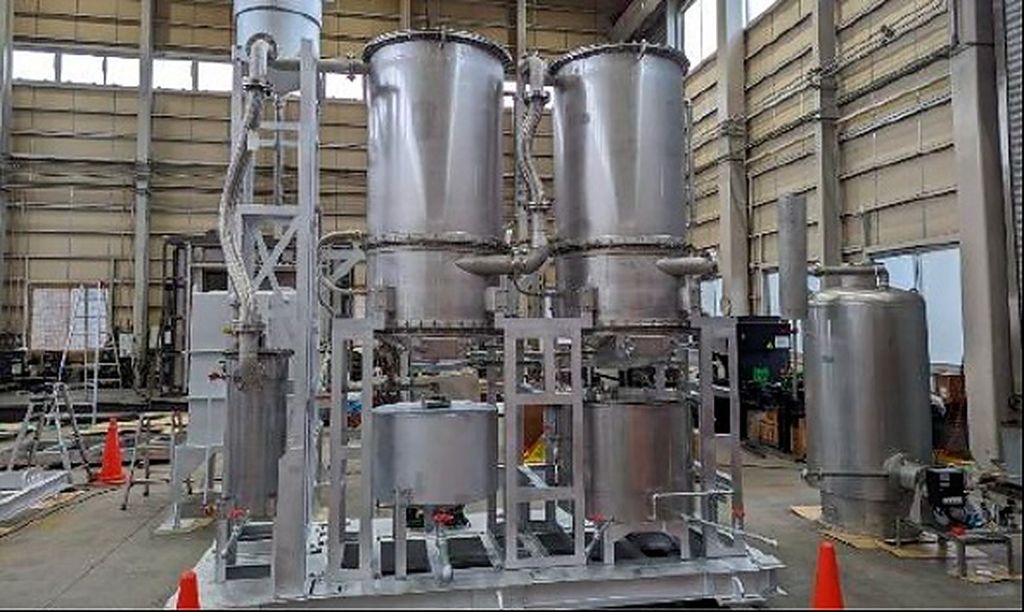
The plant links feeding, pyrolysis, cooling, separation and storage into a single managed flow. A control system supervises temperature and pressure across the line, supported by shut-off valves, backflow prevention and combustion treatment of surplus gas.
プラントは、原料の装填・熱分解・冷却・分離・貯蔵を一連の工程として連結し管理する。制御盤が工程全体の温度・圧力を監視し、遮断弁・逆流防止機構・余剰ガスの燃焼処理設備がこれを支える構成としている。
5Energy Utilisationエネルギーの活用
Pyrolysis produces a gas fraction that does not condense into oil. Part of that gas is used as fuel for process heating and, where the configuration allows, for on-site power generation — reducing energy the plant must draw from outside.
熱分解では、油として凝縮しないガス分が生じる。このガスの一部を工程の加熱用燃料として、さらに設備構成に応じて発電にも活用することで、外部から供給するエネルギーの低減を図る。
The share of gas available for heating or generation depends on plant design, load and operating conditions, and is determined for each installation.
加熱や発電に利用できるガスの割合は、設備設計・負荷・運転条件によって異なり、導入ごとに確認すべき項目である。
6Environmental Performance環境性能
By recovering material and reusing the process gas, the system targets a lower-carbon route than incineration of the same feedstock. Reference figures below follow the source calculation basis; actual reduction depends on processing conditions, electricity mix, comparison basis and system boundary.
廃タイヤの再資源化と、処理工程で発生するガスの活用を通じて、従来の焼却処理と比較したCO₂排出量の削減を目指す。以下は元資料の算定条件に基づく参考値であり、実際の削減効果は処理条件、使用電力、比較対象、システム境界等によって異なる。
7Circular Resource Model資源循環モデル
Chemical recycling does not end at treatment. Each recovered stream needs a defined industrial destination, and throughput and operating data are recorded so that recovery yield and environmental performance can be tracked over time.
ケミカルリサイクルは処理で完結しない。回収した油・カーボン・鉄それぞれに産業側の利用先を定め、処理量や稼働状況を記録することで、資源回収量と環境負荷の低減効果を継続的に把握する。
8Conclusion結論
An integrated pyrolysis line converts a bulky, non-decomposing waste stream into three defined material streams under sealed, negatively-pressurised, instrumented conditions. Process gas is fed back into heating and generation, and the resulting CO₂ profile is materially below the incineration baseline under the source calculation basis. Continued improvement rests on standardised measurement of yield, energy balance and downstream reuse for each installation, rather than on abstract commitment.
本方式は、かさばり自然分解しない廃タイヤを、密閉・負圧・計装管理下の一連工程によって 3 系統の材料へ変換する。工程内で発生するガスを加熱・発電へ再利用し、元資料の算定条件においてはCO₂排出量が焼却基準を大幅に下回る。今後の改善は、抽象的な言明ではなく、導入サイトごとの回収量・エネルギー収支・再利用先に関する標準化された測定にに基づくべきである。